Sep 2, 2026News & Insights
How an LCD Bar Display Works: The Technology Behind the Image
An LCD bar display uses the same fundamental liquid-crystal principles as a conventional LCD, but the panel, pixel layout, backlight, and driving electronics are arranged for an...
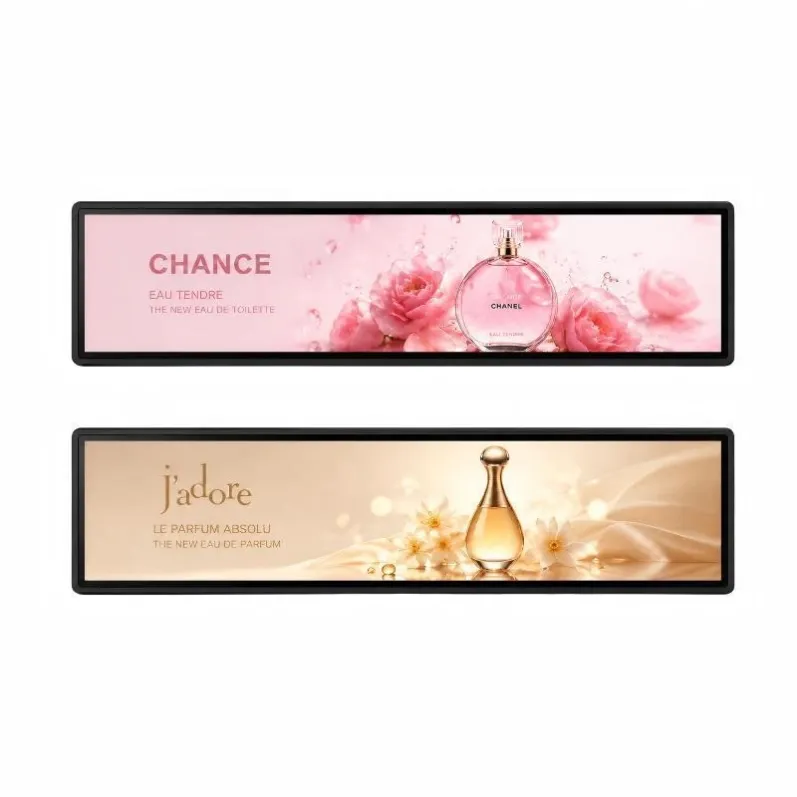
How an LCD Bar Display Works: The Technology Behind the Image
An LCD bar display uses the same fundamental liquid-crystal principles as a conventional LCD, but the panel, pixel layout, backlight, and driving electronics are arranged for an elongated active area. Understanding the optical stack explains how electrical signals become a visible color image.
The Optical Behavior of Liquid Crystals
Liquid crystals flow like a liquid while maintaining direction-dependent optical properties associated with crystals. When an electric field is applied, their orientation changes. That change affects how polarized light travels through each pixel, allowing the display to regulate brightness electronically.
The Main Layers of the Display
Liquid-Crystal Cell and Glass Substrates
The liquid-crystal material is sealed between glass substrates containing transparent electrodes and, in an active-matrix panel, thin-film transistors. Each transistor controls an individual subpixel.
Color Filters
Red, green, and blue subpixels combine at different intensities to produce the perceived color of each pixel. Smooth gradations are created by controlling the transmitted light through these subpixels.
Backlight and Polarizers
Because the liquid-crystal layer does not emit light, an LED backlight illuminates it from behind. Optical films distribute the light, while polarizers before and after the cell work with the liquid crystals to control how much light reaches the viewer.
Timing and Drive Electronics
The main controller receives an image signal and maps it to the panel's native resolution. Timing-control and driver circuits address rows and columns, while the power and backlight circuits generate the voltages required by the panel.
How a Pixel Produces an Image
The applied voltage changes the liquid-crystal orientation in each subpixel. Depending on the panel mode, this alters the polarization and therefore the amount of red, green, or blue light transmitted. Millions of subpixels update rapidly to form a complete image.
TN, IPS, and VA technologies arrange and drive liquid crystals differently; their operation cannot be reduced to a universal 90- or 180-degree rotation. These differences influence viewing angle, contrast, response, and color consistency.
Why the Bar Format Matters
The elongated panel can show route maps, shelf information, dashboards, and panoramic content while using limited vertical space. Continued improvements in panel resolution, backlighting, controllers, and optical treatment are expanding its use in commercial and industrial systems.
The Signal Path Behind the Optical Image
At system level, the process begins before light reaches the liquid-crystal cell. A media player or computer outputs a video signal, the controller interprets that signal, and timing electronics map the data to the panel’s native rows and columns. Power circuits provide the voltages required by the controller, panel, and backlight. A mismatch at any stage can produce no image, incorrect proportions, unstable color, or intermittent operation.
This system view distinguishes the technology article from our optical imaging explanation. The imaging guide focuses on backlight, polarizers, liquid crystal, and color filters; this article focuses on how content becomes correctly timed pixel data and how the display electronics coordinate startup, playback, and control.
Why Integration Matters in an Ultra-Wide Format
Bar panels use resolutions and aspect ratios that may not be recognized correctly by every source. EDID data, controller firmware, output timing, orientation, and content dimensions should be tested together. An image can be electrically stable yet still appear stretched or cropped when the source sends a conventional resolution.
Long enclosures also influence backlight distribution, heat flow, cable length, and mechanical support. Reliable operation comes from treating the panel, controller, power supply, player, enclosure, firmware, and content as one system. Component specifications alone cannot confirm that the finished display will start consistently and reproduce the intended image.